



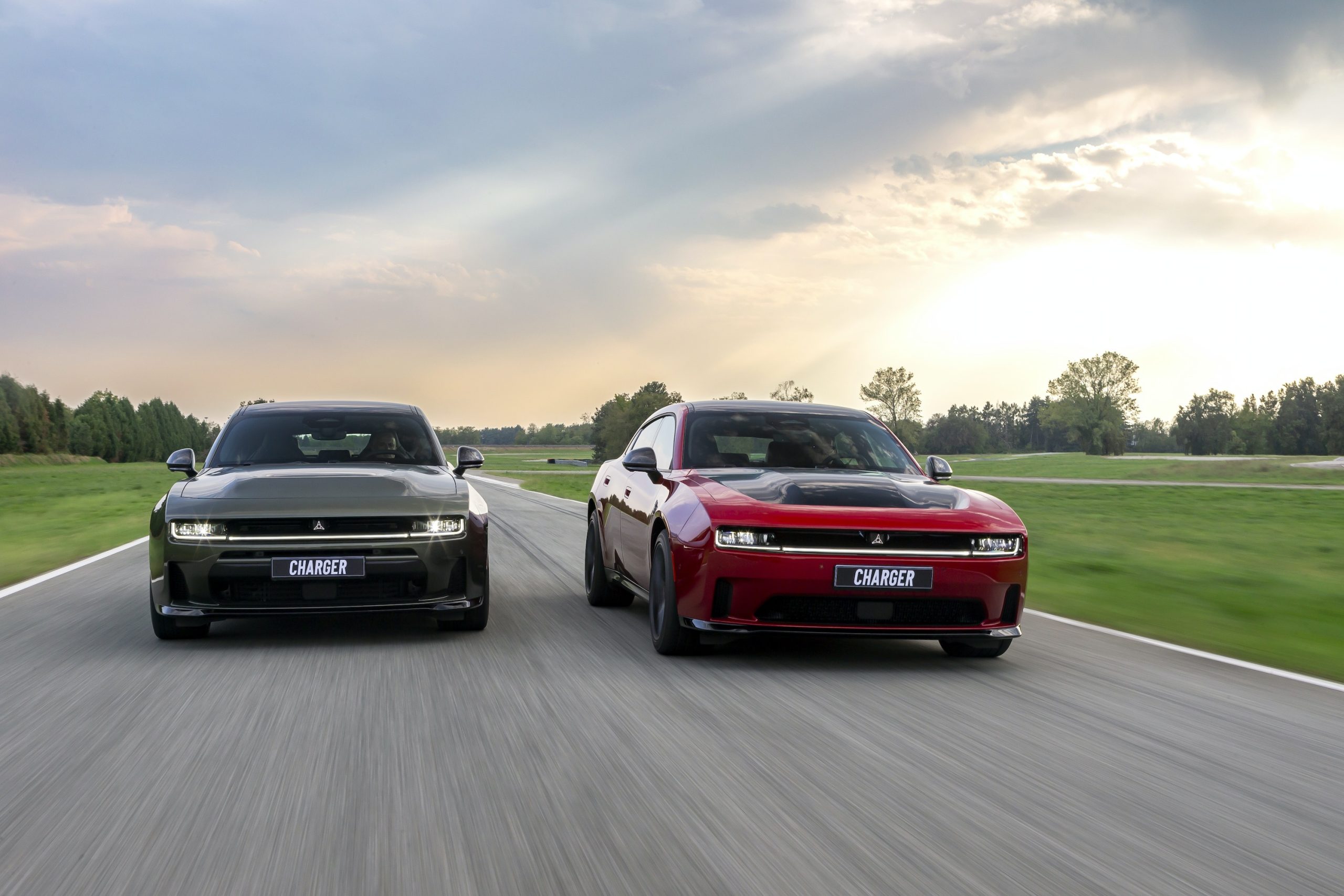
For a while, the future of the Dodge Charger looked as though it would come with a battery whether traditional muscle-car buyers liked it or not. The reality has turned out rather differently.
The eighth-generation Charger has been engineered from the beginning as a multi-energy muscle car, which means Dodge can sell essentially the same basic car with either an electric drivetrain or a twin-turbocharged straight-six. Rather than deciding which side of the EV argument is correct, Dodge has built both.
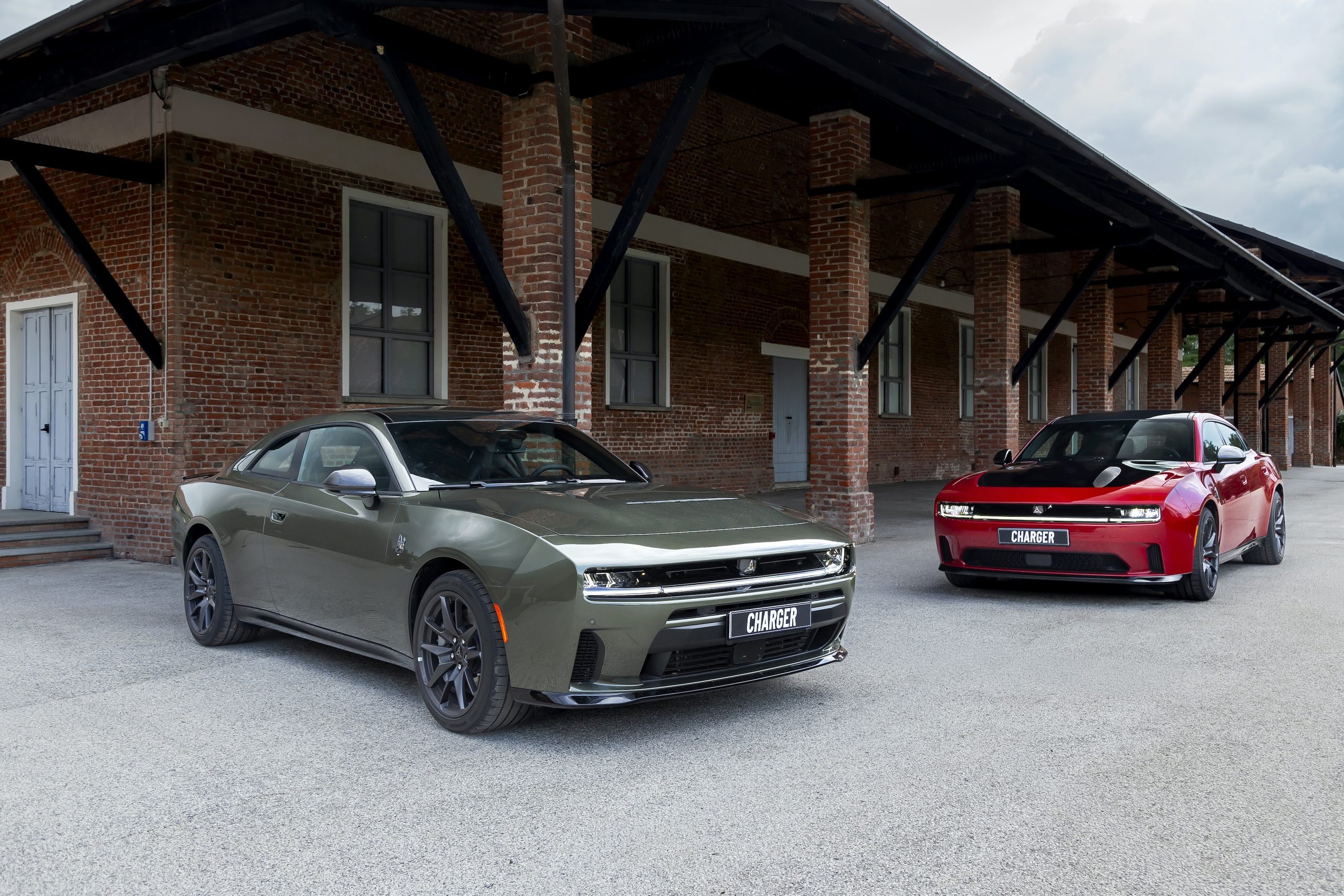
The electric side is represented by the Charger Daytona. Its 400-volt architecture uses electric drive modules at both axles, giving the car standard all-wheel drive. The Daytona R/T produces 536 hp, while the Daytona Scat Pack pushes output to 670 hp.
That is enough to make the electric version the performance headline, but Dodge hasn’t quietly abandoned petrol.
The Charger SIXPACK uses the company’s 3.0-liter twin-turbo Hurricane straight-six. In R/T specification it develops 420 hp, while the Scat Pack receives the high-output version with 550 hp, making it the most powerful production application of the Hurricane engine.
What’s more unusual is that Dodge has tried to preserve some of the childish fun traditionally associated with muscle cars regardless of the powertrain.
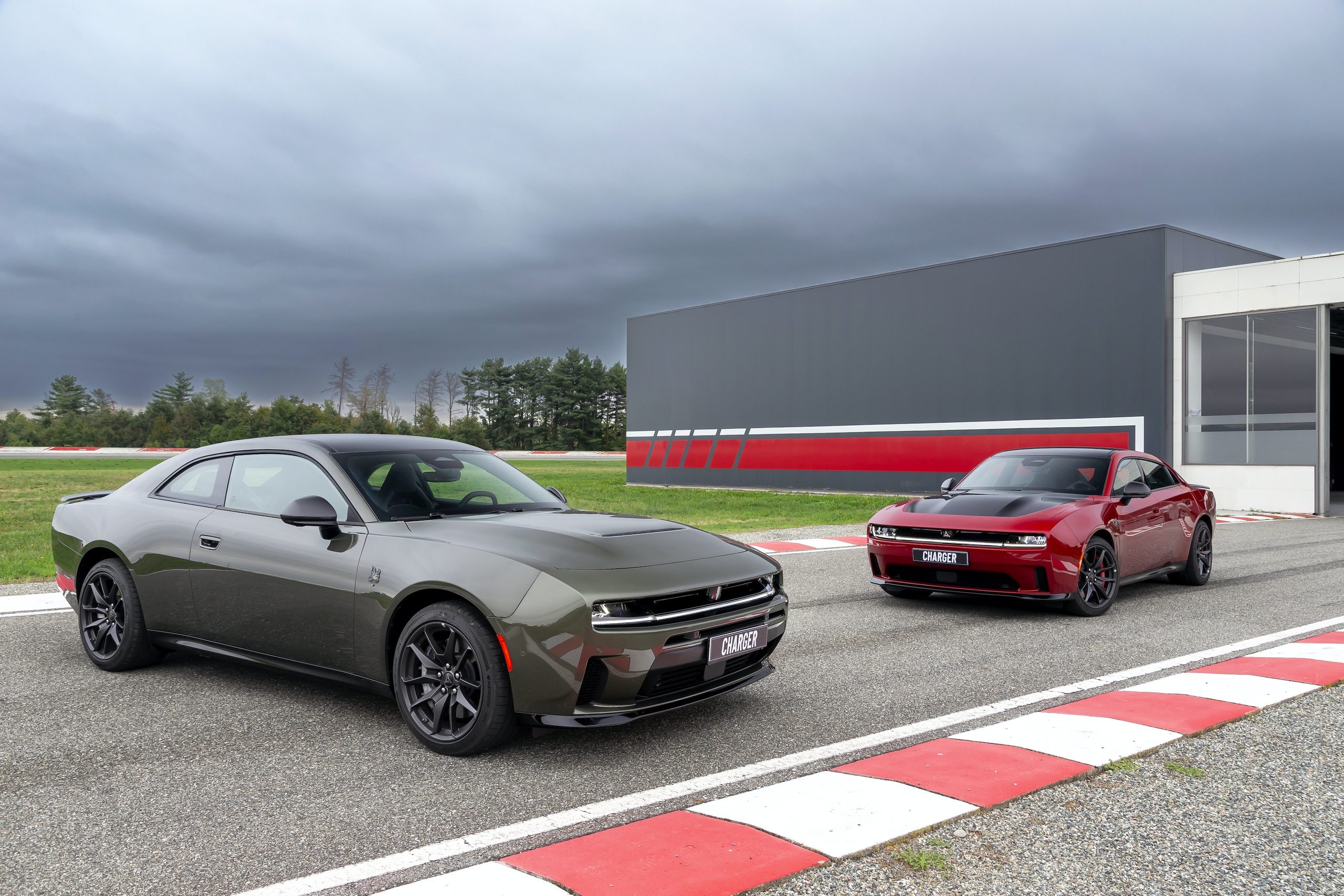
There is an RWD mode, along with Launch Control and Line Lock. Depending on specification, drivers also get functions such as Drift/Donut Mode and PowerShot. Dodge clearly understands that nobody buys a Charger because they want to arrive at the supermarket using the smallest possible amount of lateral acceleration.
The new car can also be ordered as either a two-door coupe or four-door sedan, and all-wheel drive is standard across the range. That gives Dodge an unusually broad set of combinations from one underlying STLA Large architecture.
Technology inside has changed just as dramatically. Performance Pages display acceleration times, g-forces and drivetrain information, while the Drive Experience Recorder combines vehicle telemetry with footage from a forward-facing 1080p camera and audio from an integrated microphone.
Whether every Charger owner needs to record their journey to work at 60 frames per second is another matter.
But this is a Dodge Charger. Excess has traditionally been part of the job description.
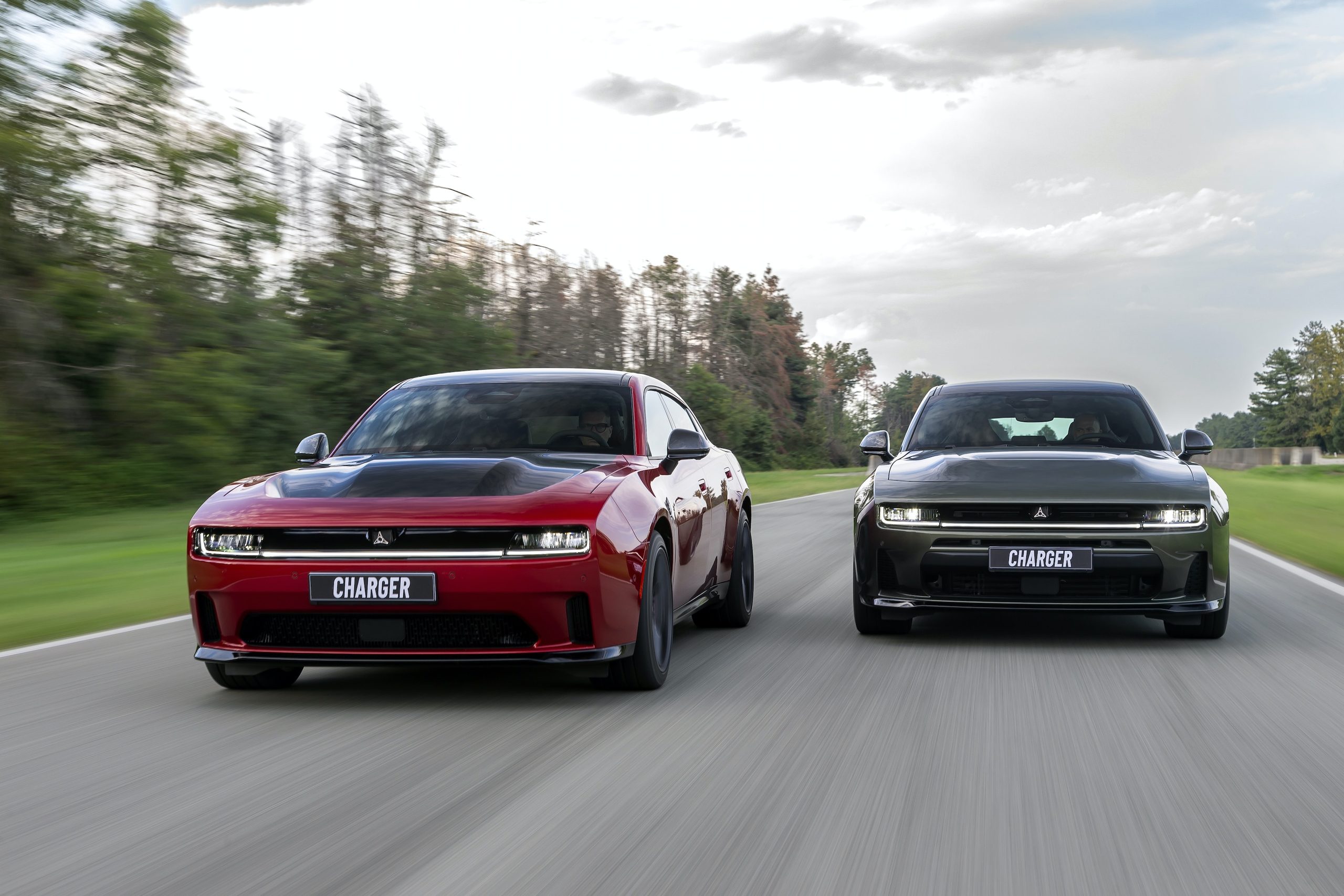
The bigger question surrounding the new generation has always been whether a muscle car can retain its identity when the mechanical recipe underneath it changes so radically. A silent electric motor and a twin-turbo six-cylinder engine are both a long way from the naturally aspirated V8s that defined much of Charger’s history.
Dodge’s answer is to focus less on the exact hardware and more on what the driver can do with it.
That won’t satisfy everyone. Some buyers will continue to believe a proper muscle car needs eight cylinders, and no amount of software, horsepower or tire smoke will change their minds.
Others may look at 670 electric horsepower and decide the argument isn’t particularly important. At least Dodge isn’t forcing both groups into the same answer.